Night Shift at the Syn chro tron
 The spectra were looking good, and all through the house, not another soul was to be found.
  We do all our work in an aluminum tree fort at one end of a long metal pipe branch. The operation of the
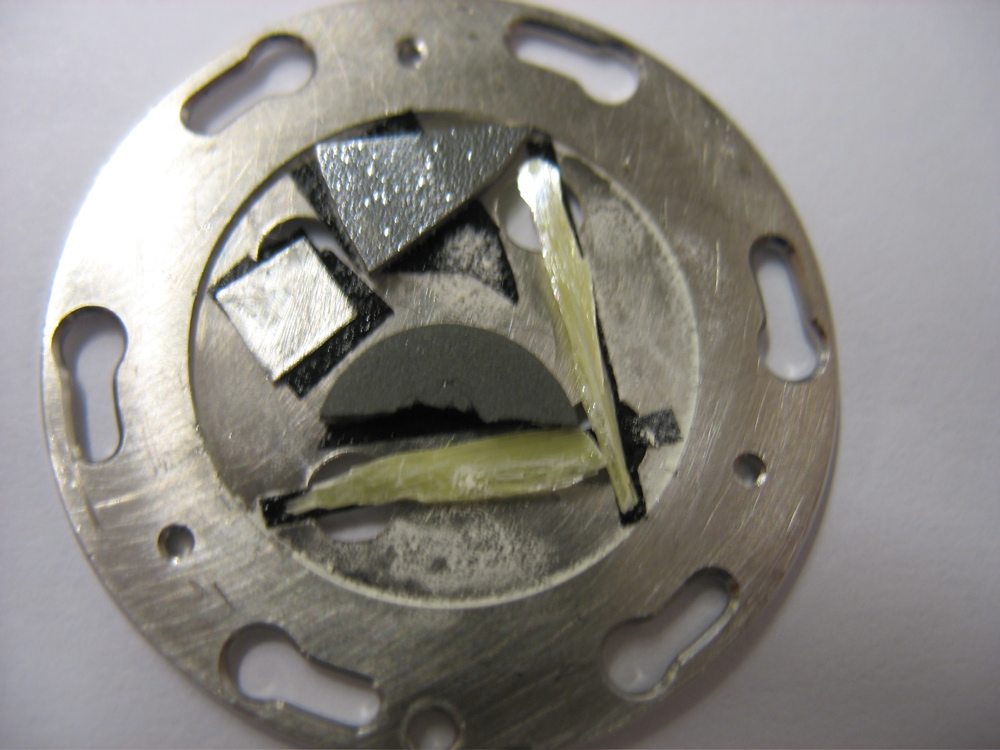
electron-filled doughnut (actually a decagon 9 meters on a side) is left to people I never see--and who quite often set the electrons racing around and then leave for the day. All of that is by way of explaining the sense of exploration with which we set out to see if there was access allowed to the center of the ring. Evidently we are permitted to look across the space at the center of the ring but not to descend into it. The giant black bags are collecting the helium and possibly nitrogen which boil off the superconducting magnets. For those who didn't play with Build Your Own Synchrotron kits as a child, magnets do one of two things for you: very carefully made little magnets keep the electrons in nice little bunches as they fly around, and very carefully made giant magnets bend the electrons' path to keep them going in a closed circle. Steering the little suckers around makes them shoot off light in the direction they were going before we pushed on them to bank, and that's the light we use in our experiments. Actually, it's one step more complicated than that: in a straight section of the electron's racetrack (rejstrakk), a whole array of magnets along the top and botttom of this pipe cause the electrons to slalom side to side on their way through, spraying light which goes forward with them but which doesn't curve away as they come into the next bending magnet. Instead it shoots forward into our beamline (really just a metal pipe with some fancy vacuuum pumps hooked to it), bounces off a few mirrors and shiny diffraction gratings, and then slams into a chunk of material we're playing with.
It's not all science as we wandered around the night-empty laboratory: there's art, too.

The big stick wielded by the Swedish lumber industry is such that the lab, part of the national university here in Lund, was required to invest a fraction of the building budget in timber. Because you can only usefully make so many cubicles out of good Swedish plywood (
 ), there are also some large-scale pieces of what can only be called art. Here Tim gives us a sense of scale for the ode to sailing. I think the title of the piece is translates "Ominous Ebony Wave of Death". My Swedish is rusty, though--meaning nonexistent. We went back to work and dawn found Tim and I sharing a beer.
It was a produktiv nightshift, and the Swedish appreciation of a lax alcohol policy was very much appreciated. Brian (the headless guy adjusting the sample positioning in the chamber) came in to relieve us and we passed the torch.

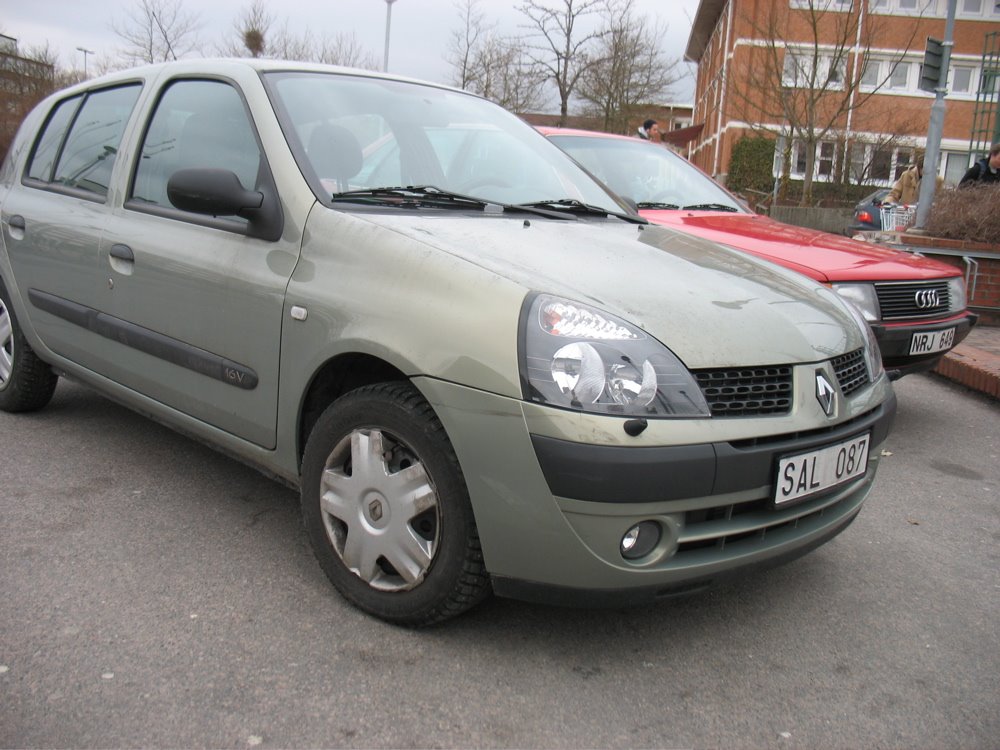
On the way home, I grabbed a shot of cars in the grocery store parking lot for a friend back home with a preternattural affinity for all things automotive.

Notice that this ICA is a Quantum Tuna, open every day 9am-10pm. This figures large in my schedule, now that I'm only awake for the last four hours of operation.

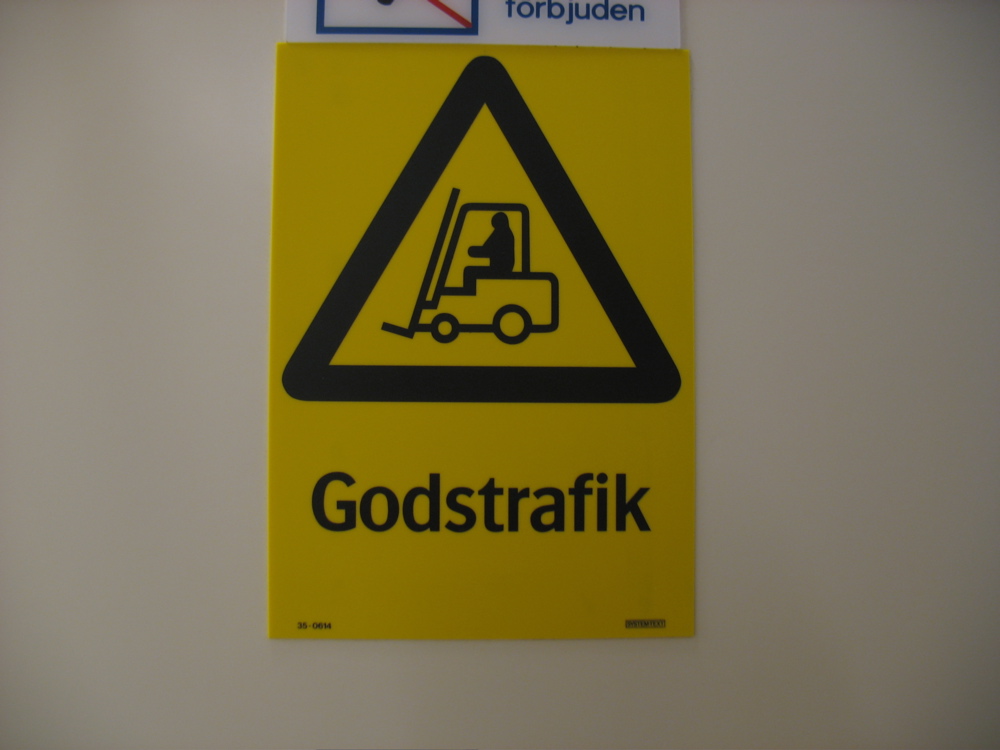
In the guest house elevator, a warning tone is set for my day's sleep. Recycling can be a dangerous undertaking.
Returning refreshed to the beamline that afternoon, we got to talking about the pros and cons of cats and dogs as pets. In a light Irish accent, imagine hearing the following:
"I'd like a monkey, but I don't like the way their anuses stick out." (BK).

Can you find the leprechaun who said this?
Is the radiation starting to get to us? I certainly hope so.
From the middle of tomorrow night,
-Dr. S